Linear Discriminant Analysis (LDA) is a supervised dimensionality reduction technique that projects data in a way that maximizes class separation. Unlike PCA, which is unsupervised and focuses on variance, LDA leverages class labels to identify directions that best distinguish categories. In a financial context, LDA was applied to a synthetic...
Verified link by Valmet Tissue Converting Solutions
Linear Discriminant Analysis Clearly Explained Information Center
Get comprehensive updates, key reports, and detailed insights compiled from verified editorial sources.
Introduction of Linear Discriminant Analysis Clearly Explained

Linear Discriminant Analysis (LDA) is a supervised dimensionality reduction technique that projects data in a way that maximizes class separation. Unlike PCA, which is unsupervised and focuses on variance, LDA leverages class labels to identify directions that best distinguish categories. In a financial context, LDA was applied to a synthetic dataset of 1,000 borrowers to predict loan default based on features like credit score, loan amount, interest rate, and income. A logistic function was used to create the default target variable, and features were standardized before applying LDA. The data was reduced to a single linear discriminant (LD1), and visualized using histograms to show separation between default and non-default borrowers. A logistic regression classifier trained on LD1 achieved 99% accuracy overall, although recall for defaulters remained low due to class imbalance. The feature importance from LDA revealed that loan amount, interest rate, and debt-to-income ratio contributed positively to default, while income and credit score had negative influence. A horizontal bar chart illustrated these coefficients and their directional effects. LDA’s strength lies in its ability to not just reduce dimensions, but to do so in a way that improves classification. It can also be combined with PCA or SVM in a workflow to enhance performance and interpretability.
Main Features
Explore the key sources for Linear Discriminant Analysis Clearly Explained.
Latest News
Stay updated on Linear Discriminant Analysis Clearly Explained's newest achievements.
Featured Video Reports & Highlights
Below is a handpicked selection of video coverage, expert reports, and highlights regarding Linear Discriminant Analysis Clearly Explained from verified contributors.
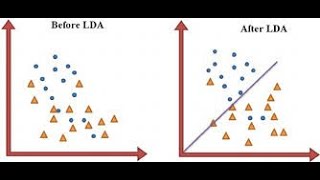
Linear Discriminant Analysis Clearly Explained
Detailed Analysis
Data is compiled from public records and verified media reports.
Last Updated: May 22, 2026
Final Thoughts
For 2026, Linear Discriminant Analysis Clearly Explained remains one of the most searched-for profiles. Check back for the newest reports.
Disclaimer:
