Detailed Video:- https://youtu.be/tS4tc9qgWbA Your queries:- Authentication & Authorisation in Microservices authentication and authorization in spring boot microservices token security microservices token security pattern microservices token security authentication jwt token security microservices security microservices security using jwt...
Verified link by Valmet Tissue Converting Solutions
Authentication & Authorisation In Microservices Short Information Center
Get comprehensive updates, key reports, and detailed insights compiled from verified editorial sources.
Introduction of Authentication & Authorisation In Microservices Short
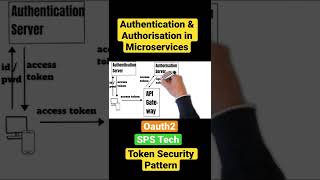
Detailed Video:- Your queries:- Authentication & Authorisation in Microservices authentication and authorization in spring boot microservices token security microservices token security pattern microservices token security authentication jwt token security microservices security microservices security using jwt authentication gateway microservices security spring boot microservices security architecture microservices security with oauth2 microservices security patterns Authentication in microservices Authentication & Authorisation Microservices Short, authentication and authorization in spring boot microservices,token security microservices,token security pattern microservices,token security authentication,jwt token security,microservices security,microservices security using jwt authentication gateway,microservices security spring boot,microservices security architecture,microservices security with oauth2,microservices security patterns,microservices security interview questions,Api gateway microservices security. It’s very critical to provide authentication and authorization security to the microservices apps, when they communicate with each other. Mostly, microservices are exposed as REST APIs in distributed environments. REST APIs are stateless. It’s challenging to maintain client sessions with backend REST APIs. A strong API security mechanism is required to communicate between consumer and producer microservices. This API token security pattern provides a better Authentication & Authorization (A&A) service and maintains a session between client and backend REST APIs. For example, web/mobile clients connect to the API gateway first, which is a single point of entry of backend REST API microservices. The following diagram depicts how to get the API token by passing the access token to the authorization server which could be JWT/OAuth and get the API token to access backend APIs. Web/mobile clients will add this API token to the REST request call in the form of an HTTP request header and pass it to other backend services after A&A: There are multiple open source and enterprise solutions to implement the API token security. OAuth and JavaScript Web Token (JWT) are popular, which create encrypted tokens and encrypt other information like user details, roles, and other key-value pairs. There is a provision to also add the expiry time of the API token. This token is generated by the server-side A&A service on demand. It can be added to a client’s service REST API header during the inter-microservice communication. This token is authenticated and validated for the expiry time on every request and then authorized to connect to backend business services and databases. So, with a design pattern, only authorized services can be granted access to microservices APIs. The API gateway is a recommended way to expose all backend microservices to client services like mobile, web, and other clients. It provides a single point of entry to the backend APIs. It uses this API access token internally to get access. It internally integrates with the access token API. Advantages The advantages are as follows: Secures inter-communication between microservices. Provides secure and strong encrypted authorization. Also provides user roles, which can be checked and accessed at the backend authorization service. Tokens can be encrypted with a strong encryption algorithm and expiry time. Access token can be also created to access a new security token, if it’s expired. Use cases The use cases are as follows: User login authentication. User role authorization like admin, read only access, and so on. Use the API gateway with microservices.
Important Facts
Explore the key sources for Authentication & Authorisation In Microservices Short.
History
Stay updated on Authentication & Authorisation In Microservices Short's latest milestones.
Featured Video Reports & Highlights
Below is a handpicked selection of video coverage, expert reports, and highlights regarding Authentication & Authorisation In Microservices Short from verified contributors.
Authentication & Authorisation in Microservices Short
Deep Dive
Data is compiled from public records and verified media reports.
Last Updated: May 22, 2026
Final Thoughts
For 2026, Authentication & Authorisation In Microservices Short remains one of the most searched-for profiles. Check back for the latest updates.
Disclaimer:
