Want reliable, survey grade accuracy in your drone photogrammetry? You can't skip Ground Control Points (GCPs). In today’s masterclass, we are breaking down the exact workflow to guarantee high-accuracy drone maps without losing your mind during the manual marking process. We cover everything from the math behind GCP placement to fixing common...
Verified link by Valmet Tissue Converting Solutions
Ground Control Points For Drone Mapping (Best Practices Explanation) Information Center
Get comprehensive updates, key reports, and detailed insights compiled from verified editorial sources.
Overview on Ground Control Points For Drone Mapping (Best Practices Explanation)

Want reliable, survey grade accuracy in your drone photogrammetry? You can't skip Ground Control Points (GCPs). In today’s masterclass, we are breaking down the exact workflow to guarantee high-accuracy drone maps without losing your mind during the manual marking process. We cover everything from the math behind GCP placement to fixing common elevation error and the dreaded "Bowl Effect." Plus, I'll show you the absolute fastest way to process hundreds of GCPs using MipMap software—whether you are flying with an RTK drone or standard GPS! 🎁 GIVEAWAY ALERT: Want to win a 1-year MipMap Pro license (worth $799)? Leave a telling me what tutorial you’d like to see next! (The comment with the most likes in the next 72 hours wins!) ⏱️ Video Chapters: 0:00 - Intro & MipMap Pro Giveaway! 0:49 - How many GCPs do you actually need? (The Math) 1:29 - Fixing the "Bowl Effect" & Z-Axis Scale Errors 3:54 - The Golden Rules of GCP Placement & Targets 4:30 - What makes a good (and bad) GCP target? 5:40 - The Fastest Way to Mark GCPs in MipMap (RTK Workflow) 9:30 - The 3-Point Pre-Optimization Trick (Non-RTK / Standard GPS) 11:14 - Summary 🛠️ Software Used in this Video: MipMap Photogrammetry and Gaussian Splatting Software: 💡 Key Takeaways: The Math: You need at least 3 non-collinear points to lock your 3D model, but that isn't enough to prevent distortion. The Layout: Stick to the "Four Corners + Center" rule for standard sites. The Targets: Always use high-contrast checkerboards or crosshairs. Never use circles! The Efficiency: Use predictive snapping and Aerial Triangulation (AT) in MipMap to cut your office work down to minutes instead of hours. If you found this deep dive helpful, please for more drone mapping tutorials and tips! Have questions about MipMap or aerial mapping workflows? Drop them in the comments below!
Core Information
Explore the primary sources for Ground Control Points For Drone Mapping (Best Practices Explanation).
Recent Updates
Stay updated on Ground Control Points For Drone Mapping (Best Practices Explanation)'s latest milestones.
Featured Video Reports & Highlights
Below is a handpicked selection of video coverage, expert reports, and highlights regarding Ground Control Points For Drone Mapping (Best Practices Explanation) from verified contributors.
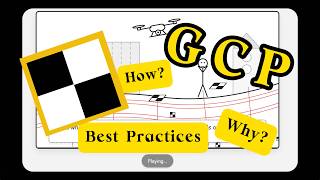
Ground Control Points for Drone Mapping (Best Practices Explanation)
Full Guide
Data is compiled from public records and verified media reports.
Last Updated: May 23, 2026
Summary
For 2026, Ground Control Points For Drone Mapping (Best Practices Explanation) remains one of the most talked-about profiles. Check back for the latest updates.
Disclaimer:
